
The Great Migration is not an event with a start date and an end date. It is a continuous, circular movement of well over a million wildebeest, along with zebra and gazelle, across the Serengeti-Mara ecosystem. That makes “when is the best time?” the wrong question on its own. The better question is “which part of the migration do I want to see?” Calving, river crossings, and the long columns on the move each peak in different months and in different places. This guide is built around those goals, so you can match your dates, your region, and your budget to what matters most.
The Short Answer
- For dramatic river crossings: roughly late July to early October, in the northern Serengeti and Kenya’s Masai Mara.
- For calving and predator action: roughly late January to March, in the southern Serengeti and Ndutu.
- For quieter, cheaper trips with large herds: November to December and May to June, accepting more variability.
Timing shifts from year to year, because the herds follow rain and fresh grass, not the calendar. Treat every date below as a probability, not a promise.
How the Migration Actually Works
Understanding the logic helps you plan. One 2026 guide describes the migration as a roughly 800-kilometer journey through the Serengeti-Mara ecosystem, driven by rainfall and grazing. Tanzania hosts the herds for most of the year, and the same guide notes that Kenya’s Maasai Mara delivers the famous Mara River crossings from July to October. dumaexplorerdumaexplorer
A common misunderstanding is that the migration “starts” in Kenya or “ends” in Tanzania. In reality, one travel blog stresses that the migration is always in Tanzania, and only some herds are in Kenya at some point between July and October. That matters if you are choosing between countries. aluxurytravelblog
Month-by-Month: Where the Herds Are
January to March: The Calving Season
The herds gather on the short-grass plains of the southern Serengeti and the Ndutu area. One guide reports that from late January through March, around 400,000 to 500,000 wildebeest calves are born. Predators follow, so lions, cheetahs, and hyenas are active in open country with good visibility. dumaexplorer
Best for: newborn animals, predator action, photography, and shoulder-season pricing.
April to May: Moving North
The long rains arrive and the herds stream north and west through the central Serengeti. Grass is tall, conditions are wet, crowds are minimal, and some camps close.
Best for: quiet safaris and the lowest prices, if you accept weather risk and less predictable herd viewing.
June to July: The Western Corridor and the Border
The herds gather in the western corridor, where Grumeti River crossings can occur, then push north toward the Kenya border. A 2026 forecast notes that in July the first Sand River crossings begin near the Kenya-Tanzania border, though it describes them as a warm-up and not especially dramatic. pixidia
Best for: early-season crossings with fewer vehicles than the peak.
August to September: The Peak of the Mara
This is the phase most travelers picture. One 2026 forecast expects the main herds to be settled in the Mara from late July, with the most likely peak window between 10 August and 20 September. Crossings of the Mara River are most frequent in these weeks, though no individual day is guaranteed. Pixidia
Best for: the highest odds of river crossings and strong predator sightings. It is also the most expensive and crowded period.
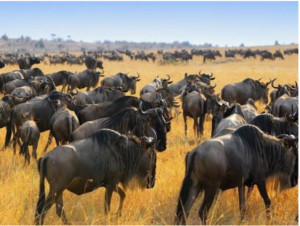
October: The Journey Home Begins
By October the herds begin heading back. One guide explains that herds shift back toward Tanzania, often crossing from the Masai Mara into the northern Serengeti, then spreading south, with strong crossing chances still possible in late September and early October, though the movement is more dispersed than in August. holafly
Another source says the last significant crossings back into Tanzania typically occur in October, with most herds leaving the Mara by early November. odoo
Best for: lingering crossings with fewer visitors, and good value compared with August.
November to December: The Return South
Short rains arrive and the herds move rapidly south through the eastern and central Serengeti. By December they are rebuilding on the southern plains, ready for the next calving season. The landscape turns green, crowds thin, and prices soften.
Best for: a quieter, greener experience with large herds on the move, though locating them requires an experienced guide.
What This Means for Late 2026 and Early 2027
If you are reading this in late October 2026, the herds are likely in the process of leaving the Mara and the far northern Serengeti, heading south and east. One regional breakdown places them in the north-east Serengeti and Masai Mara in early to mid October, then along the eastern Serengeti in early November. By mid to late November they should be moving through the central Serengeti. monkey
For travelers planning ahead:
- Next calving season (roughly late January to March 2027): book southern Serengeti and Ndutu camps now, since good ones fill early.
- Next river-crossing season (roughly July to October 2027): book northern Serengeti and Mara camps nine to twelve months ahead.
For live updates before you travel, ask your operator for current herd positions, since many publish weekly tracking.
Matching the Season to Your Goal
River crossings. Aim for August and September, with late July and early October as secondary options. Stay at least four to five nights in the region, since herds can gather at the bank for days before crossing.
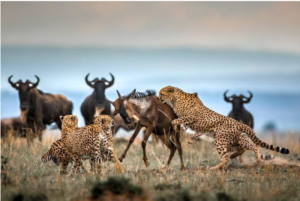
Calving and predators. Choose February in the southern Serengeti or Ndutu. Births peak over a few weeks, and the open plains make predator action easy to see.
Photography. The dry season gives clear light and dramatic crossings, while the green season gives rich color and stormy skies. Both work, depending on your style.
Fewer crowds. Consider November, early December, and May to June. You will see large herds, but with fewer vehicles at each sighting.
Value. The long rains offer the lowest prices, followed by the shoulder months. Remember that park fees are mostly fixed, so savings come mainly from lodging.
First-timers who want reliability. Late July to October gives the best overall game viewing, and the resident wildlife in both parks is excellent regardless of where the herds are.
Tanzania or Kenya?
Both can deliver a superb migration experience, but they differ.
Choose Tanzania (Serengeti) if you want calving, a longer migration season, or a vast, uncrowded landscape. The herds are here for most of the year.
Choose Kenya (Masai Mara) if you are traveling between August and October and want the herds concentrated in a smaller area. One guide notes that the herds are more concentrated in a smaller area, making them easier to find, though the parks are more crowded. dumaexplorer
Combine both if you have time and budget, allowing for the border logistics.
Costs by Season
Timing affects price more than anything else you control.
- Peak (roughly July to October): the highest lodge rates, the most vehicles, and in Kenya a higher reserve fee. Sources report non-resident entry to the Masai Mara at USD 100 per adult per day from January to June and USD 200 from July to December, so peak months cost more. upscalelivingmag
- Calving season (roughly late January to March): strong demand but generally lower than the peak.
- Shoulder and low season (roughly November to December and April to June): the best value, with more flexibility on dates.
Serengeti park fees vary by source and change over time, so confirm the current figures with your operator.
Ten Tips to Improve Your Odds
- Stay longer in one region. Three to five nights beats two nights in each of three camps.
- Choose camp location carefully. Ask how far each camp is from the expected herd position in your month.
- Consider mobile camps. They relocate with the herds and reduce travel time.
- Hire an experienced guide. Reading herd behavior is a skill.
- Ask for full-day game drives, so you don’t leave a sighting at the key moment.
- Stay flexible with dates where you can. Even a few days can matter.
- Book early for peak months and prime locations.
- Accept uncertainty. Crossings are never guaranteed, and the surrounding wildlife is still extraordinary.
- Behave responsibly. Keep distance, stay on tracks, and avoid crowding crossing points.
- Prepare practicalities: vaccinations, malaria prevention, insurance, visas, and layered clothing for cold mornings.
Common Myths
“The migration only happens in July and August.” It happens year-round. Different phases peak at different times.
“You must go to Kenya.” The herds spend much of the year in Tanzania, and the Serengeti offers excellent viewing in most months.
“Crossings happen on a schedule.” They are driven by herd behavior and rain, and can be hours or days in the making.
“Peak season is always best.” It offers the highest crossing odds, but also the highest prices and crowds. Other months have their own rewards.
Conclusion
The best time to see the Great Migration depends on what you want to witness. For dramatic Mara River crossings, plan for roughly late July to early October, with mid-August to mid-September the most likely peak, and base yourself in the northern Serengeti or the Masai Mara. For calving and intense predator action, plan for late January to March in the southern Serengeti. For quieter conditions and better value, consider November, December, or the early months of the long rains, and rely on an experienced guide. Because the herds follow rain, build flexibility into your plan, give yourself enough nights in the right region, and book early. Do that, and you will see one of the greatest wildlife spectacles on Earth.
Migration timing, park fees, and prices change, and published figures vary between sources. No sighting is guaranteed. Confirm current conditions, rates, and availability with your operator before you book.
Key Takeaways
- The migration is a continuous annual cycle, so the best time depends on what you want to see.
- Late July to early October offers the best chance of Mara River crossings, with mid-August to mid-September the likely peak in 2026.
- Late January to March is calving season in the southern Serengeti, with strong predator action.
- October to December is the return south, with fewer crowds and lower prices.
- Tanzania hosts the herds most of the year; Kenya sees them only part of the time.
- Camp location matters as much as travel month, so ask where the herds are likely to be.
- Book early, stay at least three to five nights in one region, and stay flexible.
Frequently Asked Questions
- When is the best time to see the Great Migration?
It depends on your goal. Late July to early October is best for river crossings, and late January to March is best for calving. The migration occurs year-round. - When are the Mara River crossings?
They most often occur from roughly late July to early October, with a likely 2026 peak between about 10 August and 20 September. Individual crossings are never guaranteed. - Where is the migration in October?
Typically in the north-east Serengeti and the Masai Mara, with herds beginning to return south. By November they are usually moving through the eastern and central Serengeti. - When is calving season?
Roughly late January to March, with births peaking in the southern Serengeti and Ndutu area. Hundreds of thousands of calves are born in a short window. - Is it better to see the migration in Kenya or Tanzania?
Tanzania hosts the herds for most of the year, while Kenya offers concentrated viewing from August to October. Many travelers combine both. - Can I see the migration in the green season?
Yes. November to December and the calving months offer large herds, fewer visitors, and lower prices, though locating them may take more effort. - How many days do I need?
At least three to five nights in one region. If river crossings are your priority, four to five nights improves your odds. - Is the migration guaranteed?
The herds are always moving, but their exact location varies with rainfall. No operator can guarantee a specific sighting. - Is peak season worth the extra cost?
For river crossings, usually yes. If you prefer fewer crowds and better value, shoulder months can still deliver excellent wildlife. - How far ahead should I book?
For July to October and calving season, book nine to twelve months ahead. For quieter periods, three to six months is often enough.
I can also put this in a file, or adapt the tone, audience, or target operator if you’d like. The Rwanda private primate tours piece is still available too, with the permit research already gathered.